Speech and Language Processing: An Introduction to Natural Language Processing, Computational Linguistics, and Speech Recognition
2 min readby Daniel Jurafsky, James H. Martin
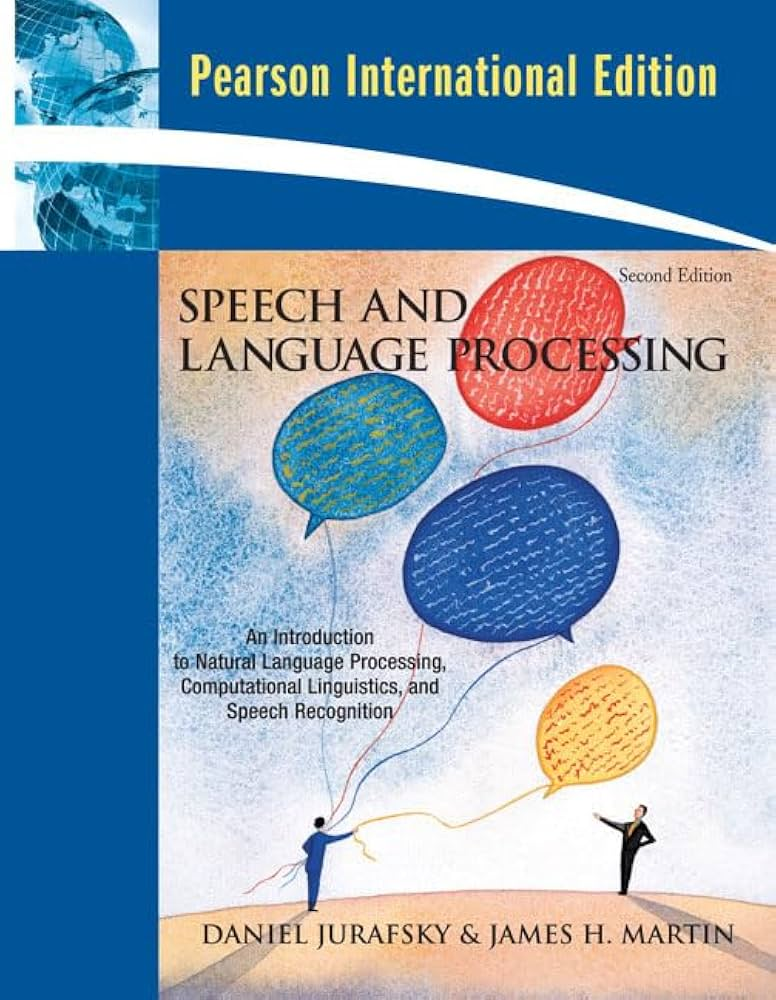
The Definitive Guide to Natural Language Processing
The authoritative textbook on NLP that provides the linguistic and computational foundation for understanding large language models and transformer architectures. This book bridges the gap between traditional computational linguistics and modern neural language models.
Why This Book is Essential for Understanding LLMs
Large Language Models are fundamentally natural language processing systems. This book provides the essential background:
- Tokenization and Text Processing: How text is converted into tokens that transformers can process
- Language Modeling: Mathematical foundation for next-token prediction and perplexity
- Parsing and Syntax: Understanding how language structure relates to transformer attention patterns
- Semantics and Pragmatics: How meaning emerges from statistical patterns in text
- Evaluation in NLP: Metrics and methods for evaluating language generation systems
Connection to Your GenAI Knowledge Tree
Critical NLP concepts that directly apply to your GenAI materials:
- Transformer Architecture: Historical context from RNNs to attention mechanisms
- Pre-training Objectives: Language modeling and masked language modeling explained
- Fine-tuning for NLP Tasks: Task-specific adaptation of language models
- Evaluation Metrics: BLEU, ROUGE, and other metrics for text generation
- Multimodal NLP: Integration of language with vision and other modalities
From Classical NLP to Modern LLMs
This book excels at showing the evolution from traditional NLP to neural approaches:
- N-gram Models to Neural Language Models: Evolution of language modeling
- Rule-based to Statistical to Neural: Paradigm shifts in NLP
- Symbolic Parsing to Attention: How transformers capture linguistic structure
- Feature Engineering to Representation Learning: From handcrafted to learned features
Practical Applications
Understanding covered in this book enables you to:
- Design better prompts for language models
- Understand why certain architectures work better for different languages
- Evaluate language model outputs more effectively
- Debug issues in text generation systems
- Design multilingual AI systems
Modern Relevance to GenAI
The latest edition covers contemporary topics:
- Neural language models and transformers
- Pre-training and fine-tuning paradigms
- Ethical considerations in NLP
- Bias and fairness in language models
- Applications to conversational AI and text generation
For GenAI Practitioners
This book is essential for anyone working with:
- Large language models (GPT, BERT, T5)
- Text generation and conversational AI
- Multilingual and cross-lingual systems
- Evaluation and benchmarking of language models
- NLP applications in production systems
This book provides the linguistic foundation that makes you effective at working with language-based AI systems, not just applying them blindly.