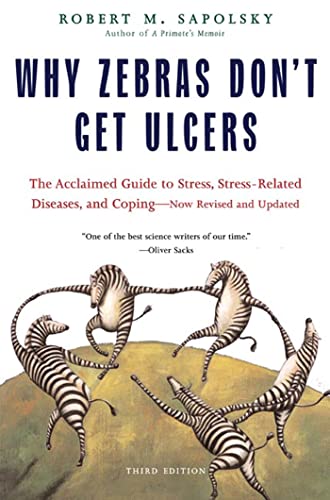
Why Zebras Don't Get Ulcers: The Acclaimed Guide to Stress, Stress-Related Diseases, and Coping
3 min readby Robert M. Sapolsky
About the Book
“Why Zebras Don’t Get Ulcers” by Stanford University biologist Robert M. Sapolsky is a groundbreaking exploration of stress and its profound impact on human health. This acclaimed work masterfully combines cutting-edge scientific research with accessible explanations and Sapolsky’s characteristic wit.
Key Themes
The Stress Response System
Sapolsky explains how our stress response system, designed for acute physical threats, becomes problematic when activated chronically by modern psychological stressors.
Zebras vs. Humans
The central metaphor: zebras experience intense but brief stress when fleeing predators, then return to a relaxed state. Humans, however, can activate the same stress response through worry, anticipation, and psychological pressure - and keep it activated for months or years.
Physiological Impact
Detailed examination of how chronic stress affects:
- Cardiovascular system - Heart disease and hypertension
- Immune system - Increased susceptibility to illness
- Digestive system - Ulcers and gastrointestinal problems
- Brain function - Memory, learning, and mental health
- Reproductive system - Fertility and sexual function
Why This Book Matters
Scientific Authority
Sapolsky brings decades of research experience studying stress in both wild baboons and laboratory settings, providing unique insights into stress biology.
Practical Applications
Beyond explaining the science, the book offers practical strategies for managing stress and building resilience in modern life.
Accessible Science Communication
Complex neurobiological and endocrinological concepts are explained with humor and clarity, making advanced science accessible to general readers.
Key Insights
- Chronic activation of acute stress responses leads to disease
- Psychological stressors can be as damaging as physical ones
- Social status and control significantly impact stress levels
- Individual differences in stress susceptibility and coping mechanisms
- Modern lifestyle factors that exacerbate chronic stress
Target Audience
Perfect for:
- Anyone interested in understanding the biological basis of stress
- Health professionals seeking deeper insights into stress-related illness
- Students of psychology, biology, or neuroscience
- Readers looking for science-based stress management strategies
Personal Learning Goals
To be updated as I read through the book:
- Understand the neurobiological mechanisms of stress
- Learn about the evolutionary origins of stress responses
- Explore the connection between social factors and stress
- Identify practical applications for stress management
- Examine the latest research on stress and aging
Reading Notes
This section will be updated with key insights and reflections as I progress through the book.
Publication Details:
- Publisher: Holt Paperbacks
- First Published: 1994
- Current Edition: Third Edition (2004)
- Pages: 560
- ISBN: 978-0-8050-7369-0
This book represents essential reading for understanding one of the most significant health challenges of modern life - chronic stress and its wide-ranging effects on human biology and well-being.